

NEWS
October 19, 2026
White room cell culture: requirements and characteristics
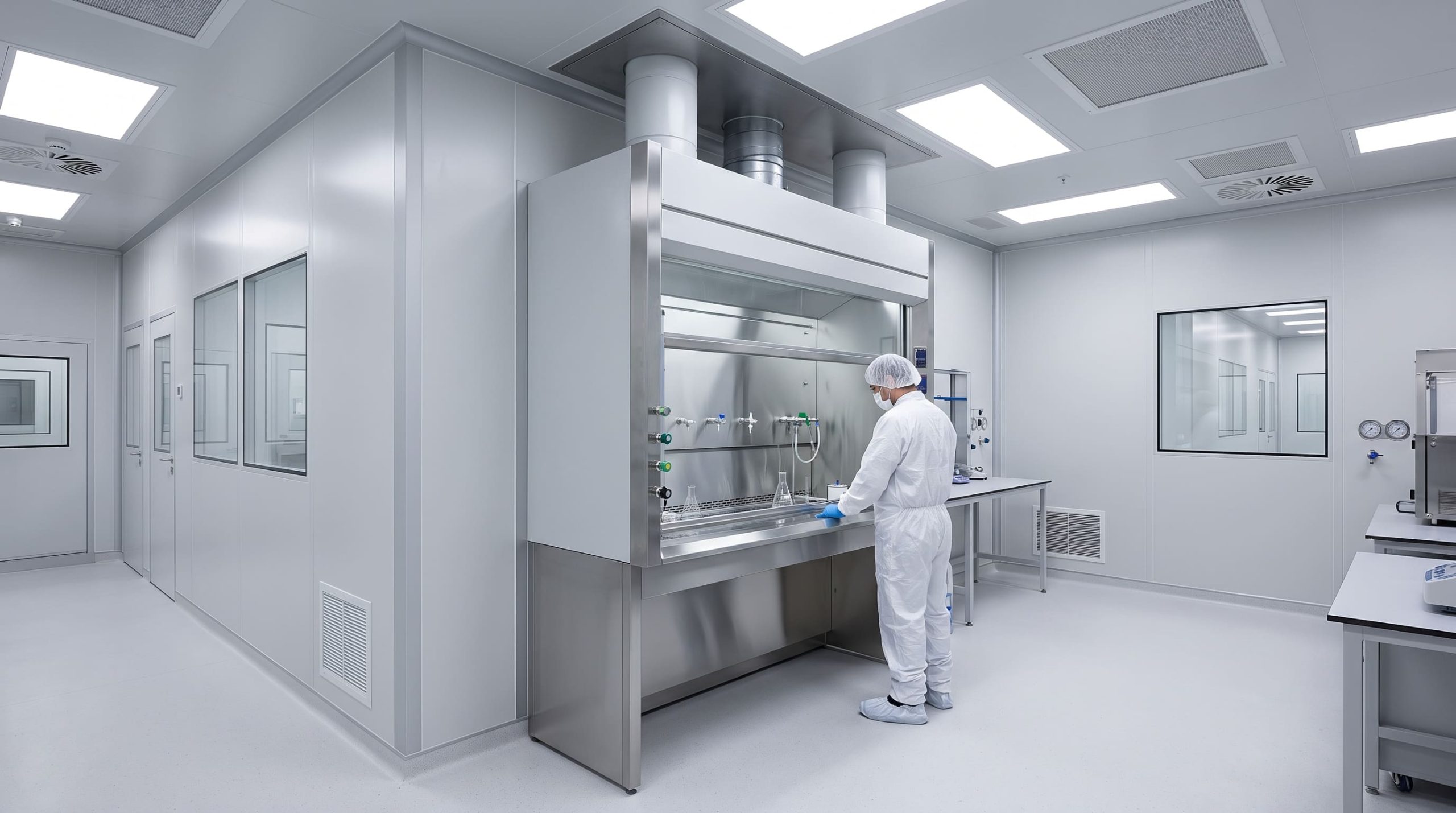
White rooms or cleanrooms owe their name and utility to the fact that they are rooms specially arranged and designed to guarantee the maximum possible reduction of contamination inside. To do this, they have different elements that allow controlling the number of existing particles per cubic meter of air. But of course, what happens when we introduce a variable as uncontrollable as a person inside? That is the time when having a disinfectant shower becomes essential to ensure the sterility of the installation. In this article we are going to focus on getting to know the disinfectant showers a little better.

A user or operator who is going to enter a sterile environment, whether it is a laboratory, or a clean room, no matter how much he has special protective suits, a mask, gloves, etc., will always come from a ‘gray environment’ and, therefore, must be disinfected mandatory before to access the room. Although the operator comes from a delimited, controlled and relatively neat space; This is not enough to guarantee cleanliness because we are talking about environments that need total sterility, so having a disinfectant shower is not negotiable.
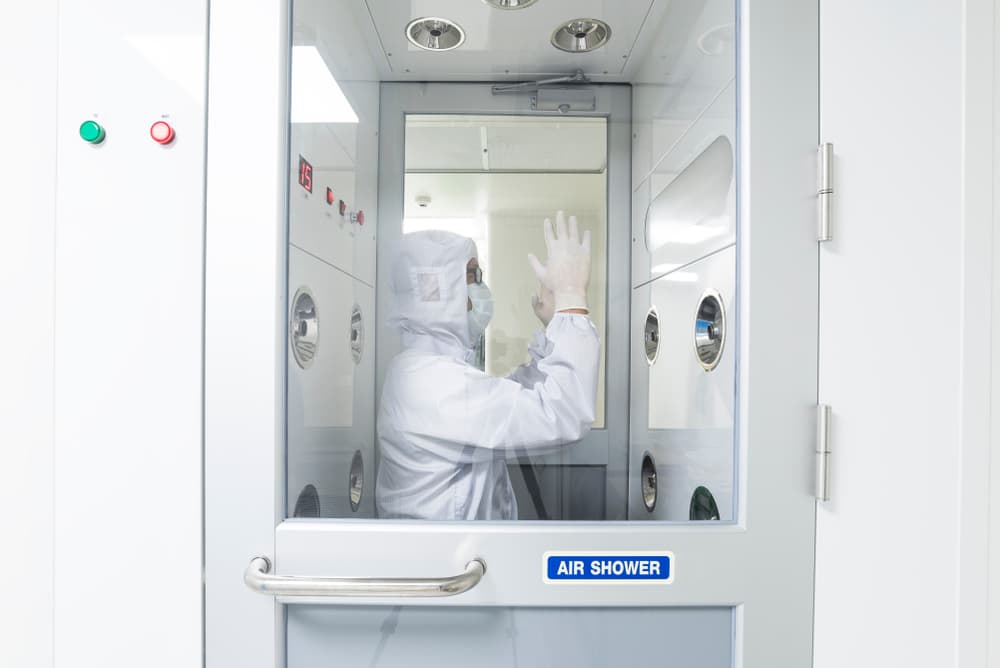
Logically, this disinfection cannot be carried out once it is inside the room, in which cleaning cars or cloths intended for disinfection of the ‘visitor’ may under no circumstances be introduced. Therefore, and which security arch in access to an airport, the disinfectant shower will ensure that the user accesses the installation in optimal conditions, that they do not put the existing asepsis conditions inside at risk. This is precisely the function of disinfectant showers.

Check how we can accompany you in your clean room project
Although we can find disinfectant showers of different types, those specifically designed for use as access control to clean rooms usually have a cabin design and lock-type operation. In this way, inside we will find a ‘gray’ door and access area and, once disinfected, a ‘white’ exit area and door.
The doors of the disinfectant shower are usually made of hardened glass, while materials such as stainless steel are usually used in the production of the cabin. As for the disinfection system, we can find air systems in which the operator’s head, shoulders and clothing will be cleaned of particles by dragging particles and in which use is made of HEPA filters.
Another of the most common disinfection systems is through the use of hot water. In these cases, the disinfectant shower must have a ventilation system in which, in addition to filters and fans, there will also be an electrical heating that will guarantee a correct drying cycle once disinfection is finished. In the same way, the shower cycles, the time of the same and the temperature of the water used must be programmable, as well as having a drainage system that facilitates the elimination of wastewater without compromising disinfection of the operator or giving rise to contaminating the area at any time. ‘White’ or the subsequent installation, because this would be totally contrary to the function that the disinfectant shower is there to fulfill.
An erroneous conception that usually exists about disinfectant showers is that they are the same as a laboratory shower. However, laboratory showers and more specifically laboratory safety showers perform a completely different function. As we have commented, before entering a clean room, it is necessary for the operator to disinfect himself as much as possible, for which disinfectant showers exist. However, the laboratory safety showers are not present to prevent external agents from entering the room, but to clean the operator in the event of an accident.
When we talk about laboratories, it is common for processes to be carried out with dangerous, toxic or corrosive elements. Therefore, if by accident these compounds are spilled on the operator, it is essential that it be cleaned as quickly as possible to avoid damage. With this objective, the laboratories are equipped with emergency showers, but, as you can see, they do not fulfill the same function as disinfectant showers..
Now that you know a little better what are disinfectant showers for clean rooms, remember that in LABSOM We are experts in the design and construction of this type of facility. Don’t hesitate to contact us If you have any kind of doubt or project in hand!
Yes, taking into account that the regulations establish that the cleanrooms must have very specific asepsis conditions, this would be impossible to comply with without a disinfectant shower, since the workers themselves who would use the clean room by introducing polluting particles into it.
Within the different systems that use disinfectant showers to fulfill their function, they are all valid and manage to reduce the presence of polluting particles to a minimum. Of course, make sure that the disinfectant shower is specific for clean rooms, since those intended for other purposes may not be completely adapted to the processes of a room of this type.
No, the products and systems used in disinfection showers are not harmful to the health of people who use them. In fact, these types of showers have to follow a series of specific regulations and specifications to guarantee their total safety, so there should not be any problem if the regulations are followed.
We handle the design, installation, management, and maintenance of cleanrooms, prioritizing safety and offering customized solutions. We will also contact you to discuss your project and prepare a quote tailored to your needs.