enEN▾
PRODUCTS AND SERVICES

Furniture

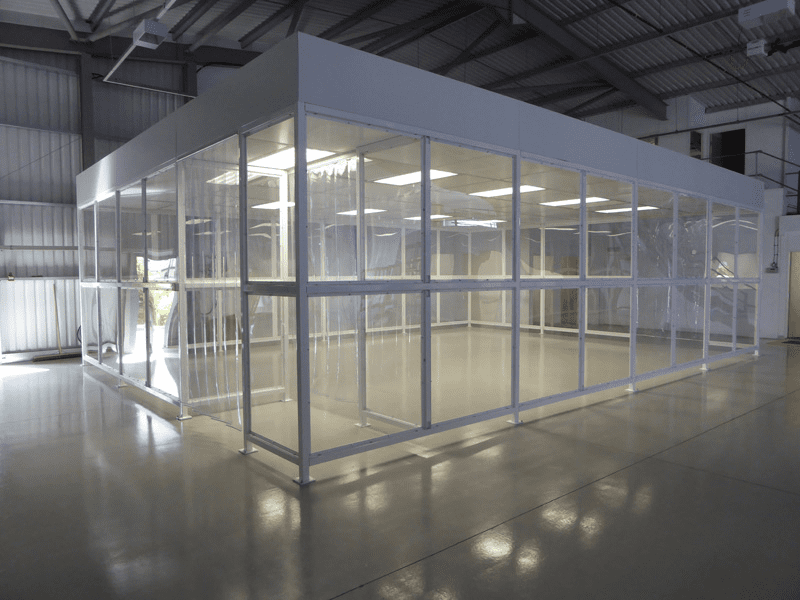
Cleanroom furniture is essential for maintaining sterility and the appropriate conditions for this type of facility. Below, we will look at some of the elements required to maintain the special conditions of a cleanroom.

Cleanroom Equipment

Cleanroom Furniture and Equipment

A cleanroom needs to have the necessary equipment to carry out the required work. Below, we describe the cleanroom furniture you need for a complete and secure setup.

Sandwich Panels

Due to the strict conditions that cleanrooms must follow, symmetrical sandwich panels with a smooth surface are used, finished in either phenolic resin or sheet metal. Both finishes have strong impact resistance, and the sheet metal finish performs well against heat.

Cleanroom Roll-Up Doors

These high-speed roll-up doors are designed for installation in the cleanrooms of the aforementioned industries. They stand out for having a design with no sharp edges and a stainless steel finish that allows for greater durability.

In addition to these features, their airtightness makes them suitable for areas where maximum cleanliness is required and no air or pressure can be lost. Furthermore, the motor and electronic control panel components are integrated into the door frames themselves, making programming easier.

More Features of Cleanroom Doors and Furniture

Due to the strict conditions that cleanrooms must follow, symmetrical sandwich panels with a smooth surface are used, finished in either phenolic resin or sheet metal. Both finishes have strong impact resistance, and the sheet metal finish performs well against heat. (Note: This paragraph in the original Spanish text is an exact repetition of the sandwich panels section).

Windows

It is recommended that the glass be tempered and contain desiccant elements to prevent moisture from appearing between the panes. We often forget that windows are also an important element of cleanroom furniture, which is why we recommend adding them to your list.

What Should Cleanroom Flooring Be Like?

Flooring in a cleanroom must guarantee durability, continuity, and ease of cleaning, preventing particle accumulation and ensuring compliance with hygienic and regulatory standards.

Mobiliario-Salas-Blancas

Technology in cleanroom furniture

Additional Equipment for Cleanrooms

Below, we will discuss some complementary equipment for cleanrooms:

Laminar or Unidirectional Airflows

These are used to define specific zones that, for one reason or another, require concrete environmental conditions. Regulations state that these are controlled airflows in which all streamlines travel in the same direction, at a uniform velocity, and in a more or less parallel manner.

Horizontal or vertical laminar flows can be constructed, and the material used will be micro-perforated sheet metal or a double veil using polyester monofilament.

SAS Systems (Pass-Throughs / Airlocks)

SAS systems facilitate the interaction and transfer of products or materials between different classified zones or between the cleanroom and the outside. They can be used to transfer materials through a chamber complex designed to guarantee safety during the transfer process. There are also biological SAS systems used to transfer and disinfect biologically contaminated material. Furthermore, SAS systems with built-in decontamination capabilities are available on the market. Therefore, having a SAS system as part of your cleanroom equipment will allow for better material management.

RABS (Restricted Access Barrier Systems)

This is a type of unidirectional airflow system that, additionally, keeps the operator separated from the product. It is highly effective because it minimizes the influence that the worker could exert on the critical process.

Air Showers

Air showers are enclosures—preferably for single occupancy with a footprint of 80–90 cm—used to dislodge particles that users may have on their clothing. This ensures they are perfectly clean before entering a cleanroom or sterile zone, as well as prior to exiting a containment area.

Water Mist Showers

These are enclosures that dispense high-pressure water mist. The objective is to cause potentially contaminating particles to bind to the protective suits, allowing for effective control of product containment upon exit.

Special Cleanroom Intercoms/Speakers

Speakers designed for this type of room are made of plastic materials and do not allow air leakage between rooms. They enable communication between different classified rooms without the need for complex electrical installations or telephone connections.

Sampling and Weighing Booths (Downflow Booths)

This is unidirectional airflow equipment designed for protection during loading, unloading, and sampling operations. They prevent personnel from being exposed to potentially toxic dust particles by drawing them toward the exhaust grilles. Additionally, these booths do not allow these particles to escape, thereby protecting the environment as well.

They are commonly used in the cosmetic, pharmaceutical, chemical, and food industries, among other useful applications.

Cleanroom Clothing

Cleanroom Apparel and Materials

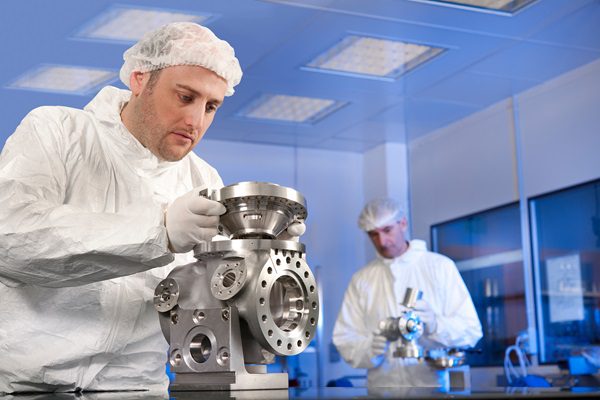
The types of apparel can vary depending on the specific use and the zones where the person wearing the protective garments is scheduled to work. As we know, there are different risk levels within cleanrooms, and depending on the degree of risk, more or less rigid control and protection requirements will be demanded. Therefore, there are different classifications of cleanroom clothing, which can be reused for more than one process if they meet the established safety requirements. The main objective of the clothing is to protect the operating personnel wearing the suit, but it is also highly critical for protecting the product from the environment, including contamination stemming from the personnel handling it.

In addition to the above, the protective fabric must be durable, and correct usage is recommended to extend its lifespan, ensuring the maximum possible safety at all times. For this reason, the material used must be sufficiently robust, featuring stitched and bound seams to prevent tears and rips during use. Furthermore, this type of cleanroom clothing is made from materials that promote static electricity dissipation to avoid interfering with equipment and processes.

Finally, it is important to consider the comfort of the suit to facilitate the execution of tasks and the product handling process. Additionally, the suit must offer different sizing options and the capability to be sterilized after use.

Cleanroom Materials

Cleanroom materials must meet certain requirements to maintain a level of cleanliness and safety throughout the entire product handling and transfer process. In the case of apparel, it must serve as a shield for the operators working in the cleanroom, but it must also be as non-contaminating as possible to ensure the quality of the product being handled. Consequently, the protective suit and the materials used for apparel must be manufactured from lint-free, non-particle-shedding fabrics.

As for furniture and equipment, they must be designed in such a way that, in addition to providing protection, they are easy to handle and, even more importantly, easy to clean. Hygiene within cleanrooms is paramount to ensuring optimal quality.

At Labsom, we are experts in the design and construction of cleanrooms for various types of sectors, adapting to the specific demands of each one and managing every phase of the process, from initial design to final implementation.

Questions about Cleanroom Furniture

Yes, if the materials present in a cleanroom do not meet the necessary requirements to maintain the safety and hygiene of the cleanroom, otherwise contamination may occur and the product being produced inside the room may not meet quality or safety standards.

If you want to know the specific requirements that apply to cleanroom furniture, you can consult the ISO regulations and Good Manufacturing Practices (GMP), where you will find all the standards established by the regulations on cleanrooms and their furniture.

Cleanliness is a top priority in a cleanroom, which is why the protocol is very strict. Cleanrooms are always disinfected starting from the cleanest area and moving to the dirtiest, from top to bottom, using cleaning products specifically designed to absorb all liquids and eliminate all types of particles.

No furniture of any kind should be brought into a cleanroom because the necessary hygiene and safety guidelines must be met to ensure safe working conditions. Therefore, any furniture placed in a cleanroom must be made of easy-to-clean materials that comply with the relevant standards.

Everything inside a cleanroom must be made of a material that will not compromise the work being performed inside. The materials should be as easy to clean as possible to prevent contamination.

Water mist refers to the dispersion of water sprayed into very small particles. It is commonly used as a more effective way to extinguish fires.

When we talk about cleanroom furniture, we're referring to all the elements found within the room, such as tables, chairs, technical equipment, and any other items necessary for the processes carried out there. However, this furniture must be specifically designed for this type of environment.


More about Clean Rooms

What are Clean Rooms?

Main characteristics of cleanrooms. Applications and sectors.

Read more

Cleanroom Design

Conceptual, basic and detailed engineering. The steps prior to the start of construction of the room.

Read more

Cleanroom Classification

Classification of Clean Rooms and Sterile Areas according to ISO 14644 standards.

Read more

Laminar flow cabinet

Types of laminar flow cabinets for cleanrooms. Uses and requirements.

Read more

Cleanroom Furniture

Cleanroom solutions; sandwich panels, doors, SAS systems…

Read more

Air treatment

Air treatment systems adapted to the specific needs of each project.

Read more
© LABSOM S.L Todos los derechos reservados 2026