ISO standards are a series of documents that set out the requirements organisations must meet to ensure the quality of the products and services they offer, thereby enabling them to achieve their objectives. The acronym ISO stands for ‘International Organization for Standardization’, and there are over 19,500 ISO standards that set out the minimum requirements that products across all sectors must meet, including, of course, cleanrooms. If you need a cleanroom that complies with the standards, please contact us.
ISO and GMP standards adhere to a series of manufacturing (GMP) and management (ISO) criteria that ensure certain products or services are produced to an appropriate level of quality, as well as in a standardized and uniform manner. Their widespread adoption is due to several factors: increasingly intense global competition, the globalization of the economy, the growing power of consumers, and so on.
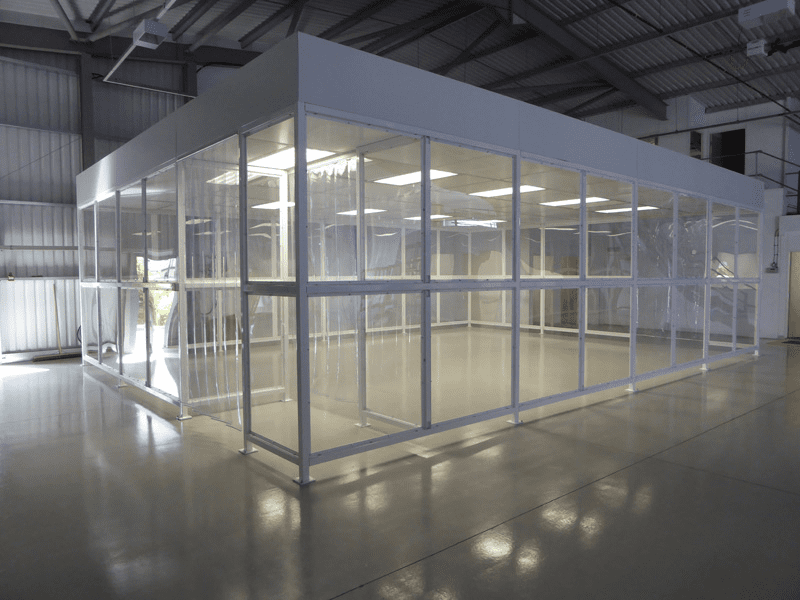
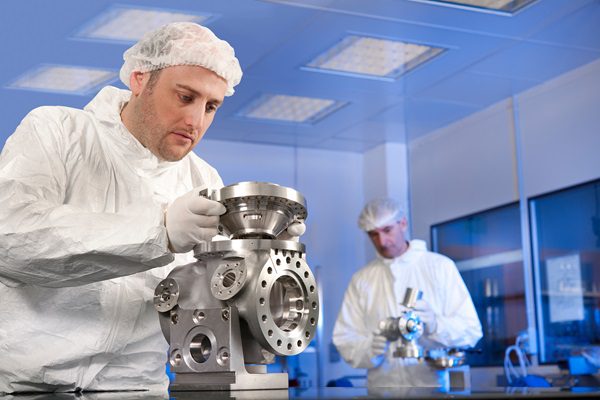
Specifically, ISO and GMP standards for cleanrooms apply to environments where various manufacturing processes take place, such as cleanrooms in the cosmetics sector, cleanrooms in the food industry, cleanrooms in the pharmaceutical industry, and so forth. These standards govern both the way products reach the end consumer and their preparation for use in hospitals and clinical trials.
ISO standards for cleanrooms guarantee air cleanliness and are currently at version 14644.1. Compliance is essential for pharmaceutical manufacturing, as it classifies cleanrooms based on their cleanliness and establishes maximum permissible particle limits. Furthermore, it clearly defines how these particles should be measured.
Differences between the current standard and the original:
The GMP (Good Manufacturing Practices) regulations for cleanrooms address the proper manufacturing of certain medications and are mandatory for the pharmaceutical industry, as they define the quality standards for these products.
The area where sterile medications are manufactured is classified according to air cleanliness, as mentioned previously, and is categorized as grade A, B, C, and D, with A being the grade that allows the fewest particles. This classification ensures the protection of the product, as well as the safety of personnel and the environment.
In addition to air cleanliness, a cleanroom must have the following characteristics:
The manufacturing of medications comprises different operations, each of which requires a specific level of cleanliness. The goal is to minimize the risk of contamination, whether from microbes or particles from the materials being used inside the rooms.
They can be applied in all types of organizations or activities that are geared towards the production of goods or services. For example, within the pharmaceutical or food industries.