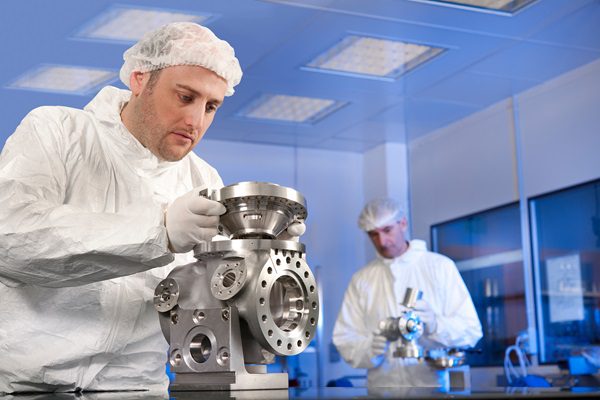
Cleanrooms are rooms designed to minimise contamination as much as possible whilst maintaining a sterile environment. Although they cannot achieve absolute sterility, when used correctly, they keep contamination at a controlled and known level, specified by the number of particles per cubic metre of air. This figure is several thousand times lower than that found outdoors, thereby creating a biosecure space in which to work on projects requiring very specific environmental conditions.
When discussing what a cleanroom is, it is often overlooked that each cleanroom must be designed for a specific purpose and, therefore, they differ from one another. Depending on the industry or sector in which they are to be used, both their purposes and their structure will differ. However, in addition to the structural design and layout of the components—since the most likely source of contamination is the room operator themselves—an essential part of using a cleanroom is the development of appropriate cleanliness protocols to ensure they remain aseptic.
With regard to current legislation on cleanrooms, it is the ISO 14644 standard, comprising 12 sections covering various aspects, which establishes the standardisation of these facilities.
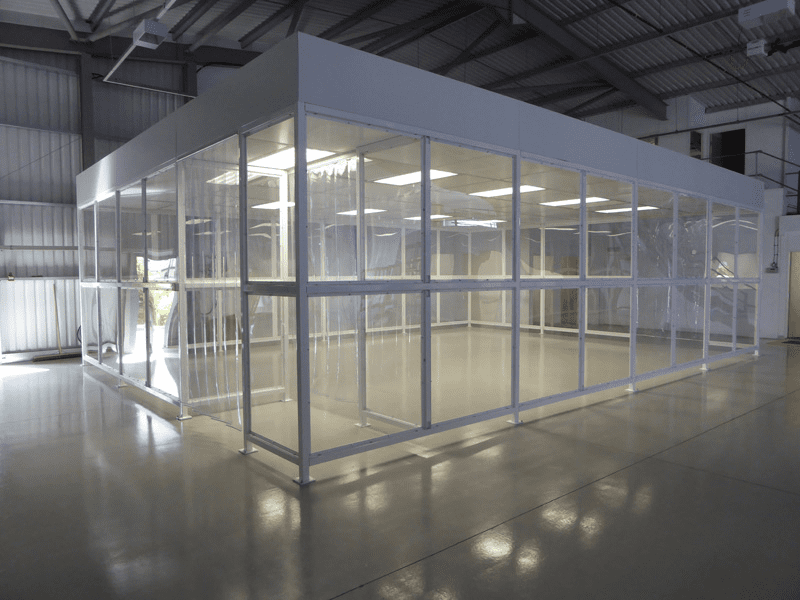

Generally speaking, cleanrooms meet their own definition in most cases. In many other cases, however, there are different types of cleanrooms. For example, many of them are not as strict when it comes to air purity, whilst others have high standards designed to prevent the occurrence of electromagnetic fields.
We can include within the subtypes of cleanrooms those spaces where machinery is used that is highly sensitive to various types of disturbances. In short, every cleanroom is different and has specific characteristics to adapt it to the work and tasks to be carried out within it, although they all comply with certain standards and regulations.
Critical processes are carried out in cleanrooms under controlled conditions, such as:
The duties of a cleanroom operator include various key tasks in controlled environments, such as:
We refer to a “gray room” as a conventional cleanroom with all the standard features and specifications, but without an air filtration or purification system.
Different types of cleanrooms vary in terms of the level of safety and cleanliness they provide. For processes that do not require an extremely high level of safety, cleanrooms with a higher concentration of airborne particles may be used, while others require stricter conditions.