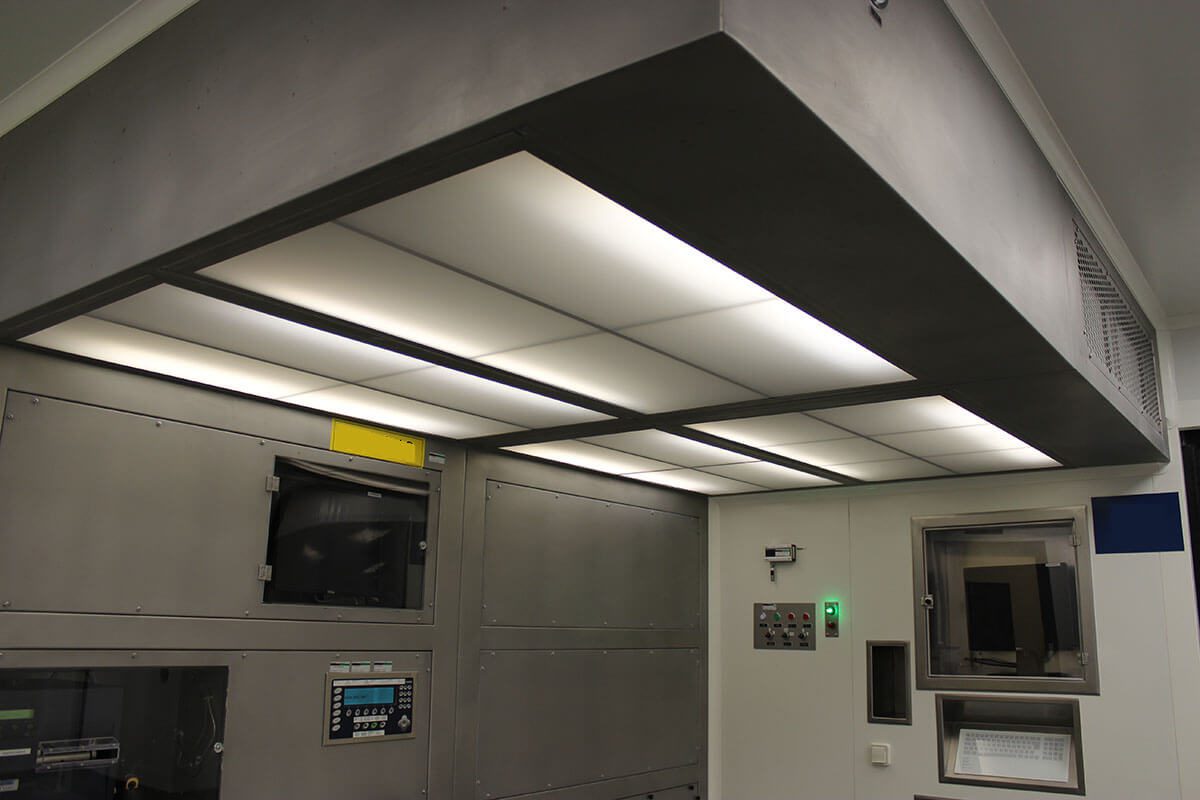
A laboratory gas showcase is a collective protection equipment designed to capture, contain and evacuate vapors, gases, aerosols and dangerous particles generated during tests and chemical operations. Its main function is to confine the work zone by means of a controlled air flow to prevent contaminants from reaching the operator’s breathing zone or dispersing through the enclosure. To choose the right model, it is necessary to evaluate the manipulated chemicals, the thermal load of the process, the UNE-EN 14175 technical regulations and the characteristics of the installation extraction system.
Key points on laboratory gas showcases:
- unlike a laminar flow booth, The gas showcase protects the user against inhalation of toxic, corrosive or flammable chemical compounds.
- UNE-EN 14175 regulatory framework: Regulates terminology, safety requirements, type tests (in situ) and specifications for variable air volume systems (VAV).
- The VAV showcases automatically adjust the air flow according to the opening of the guillotine, drastically reducing the energy consumption of the HVAC air conditioning system.
- The efficacy of containment of the showcase depends on its location; It must be installed away from crossed drafts, doors and areas of intense personnel traffic.
- Labsom offers solutions ranging from consulting services and White Room Design, up to selection, installation and Maintenance of clean rooms and laboratory equipment.
What is a laboratory gas showcase?
A Laboratory gas showcase It is a physical containment equipment designed to safely perform dangerous chemical operations. It works by creating a physical barrier and a negative airflow that drags polluting vapors out of the technician’s breathing zone.
Its main structural and security elements are:
- Work booth: Internal enclosure made of chemically inert materials (phenolic resin, AISI 316L stainless steel or ceramic) where the reagents are handled.
- Guillotine or front window: Safety laminated glass physical brake that allows the vision of the process and regulates the air opening area.
- Deflectors or plenums: Strategically positioned rear panels to channel heavy or light air currents towards extraction.
- Drive and extraction system: Network of ducts and helical or centrifugal fans that expel the air to the outside of the plant.
- Control panel and alarms: air speed metrological sensors (Velocity front) that emit acoustic and light alerts if the flow falls below the safety threshold.
How does a gas showcase work?
The working principle is based on pneumatic depression and expensive speed (Face Velocity) of the air entering through the opening of the guillotine.
Capture and movement of contaminated air
The air from the interior of the laboratory enters through the front slit formed by the guillotine. This current immediately captures the gases and vapors generated in the work tray before they can diffuse outwards.
extraction and evacuation
Deflectors located on the back wall of the showcase divide the flow as a function of the density of the gases: the heavy vapors are captured by the lower groove, while the hot or light gases are evacuated from the top, directing them towards the network of Technical extraction ducts.
Physical barrier and flow stability
The glass guillotine acts as a protective shield against chemical projections, splashes, or small-scale explosions. To avoid turbulence that breaks containment, the front air speed is usually calibrated in a stable working range, usually between 0.4 m/s and 0.6 m/s according to the test requirements.
What types of gas showcases exist?
The showcases are classified according to their mechanical architecture and the air volume management system:
Conventional Gas Showcases (CAV – Constant Air Volume)
They extract a constant flow of air continuously, regardless of the position of the guillotine. When the window is lowered, the air velocity in the aperture increases proportionally, which can generate internal turbulence if it does not have a system of bypass to redirect the air.
Variable Air Volume Showcases (VAV – Variable Air Volume)
They automatically adjust the air flow extracted in real time by means of motorized regulators coupled to the guillotine position. By maintaining a constant front speed regardless of the height of the window, they significantly reduce the energy consumption of the general laboratory air conditioning system when the guillotine remains down..
showcases for special applications
- For high thermal load or digestion with perchloric/hydrofluoric acid: Equipped with ceramic interiors, automatic duct washing systems (Scrubbers) and corrosive effluent collection pools.
- Floor showcases (Walk-in): Supported directly on the laboratory floor to introduce large volatile equipment, such as reactors or distillation columns.
Filtration recirculation cabinets (without duct)
They capture the air, pass it through specific active carbon filters to retain chemical molecules and return it to the laboratory. Its use is limited to specific operations with low toxicity substances and requires a rigorous filter replacement protocol.
What is the difference between a gas showcase and a biological safety booth?
Selecting the wrong equipment directly puts the health of the technical staff or the integrity of the samples at direct risk. The following table summarizes their fundamental differences:
| Equipo de contención |
Principal objetivo de protección |
Sustancias o agentes manipulados |
Tipo de flujo de aire |
| Vitrina de gases |
Operador y entorno |
Productos químicos tóxicos, solventes, ácidos e inflamables |
Extracción de aire 100% hacia el exterior |
| Cabina de seguridad biológica |
Operador, producto y entorno |
Agentes biológicos, bacterias, virus y líneas de cultivo celular en sala blanca |
Filtración absoluta mediante uso de filtros HEPA H14 en laboratorios |
| Cabina de flujo laminar |
Exclusivamente el producto/proceso |
Muestras inertes no peligrosas que requieren aire limpio (ISO 5) |
Flujo unidireccional de aire filtrado hacia el operador; consulta los modelos de cabina de flujo laminar |
FUENTE: ELABORACIÓN PROPIA
What regulations regulate laboratory gas showcases?
In Europe and Spain, the design, manufacture, safety and validation of these equipment are regulated by the set of standards UNE-EN 14175:
- UNE-EN 14175-1 (Vocabulary): Define the technical terms, magnitudes and definitions applicable to gas showcase engineering.
- UNE-EN 14175-2 (Security and Operation Requirements): Establishes the criteria required in terms of risk prevention: Container containment, prevention of explosive atmospheres, visibility, ergonomics and minimum lighting.
- UNE-EN 14175-3 (Type Methods): Describes the factory lab protocols for measuring the front speed, the containment rate by tracer gases and the resistance to air gusts.
- UNE-EN 14175-4 (Tests performed in situ): Determine the mandatory tests that must be carried out after the physical installation of the equipment in the client’s laboratory before its commissioning.
- UNE-CEN/TS 14175-5 (installation and maintenance): It provides the recommendations for the correct design of the duct network, the location of the fan and the preventive maintenance plan.
- UNE-EN 14175-6 (Variable Air Volume Showcases): Specifies additional safety requirements and metrological tests for VAV systems and their flow regulators.
What requirements must a gas showcase meet?
To ensure safe operation in accordance with the standard UNE-EN 14175-2, the showcase must prove:
- Proven containment: Ability to retain tracer gases during type tests, even in the face of fast openings of the guillotine.
- Homogeneous air speed: Uniform distribution of incoming flow without dead zones or return points.
- Integrated alarm systems: Continuous flow sensors that activate an acoustic and visual warning if the speed or flow falls below the configured safety threshold.
- Impact and fire protection: Tempered or laminated safety glass guillotine and self-extinguishing materials in the inner bucket.
- Ergonomics and lighting: flush interior lighting that provides optimal visibility of the tests without generating glare.
How to choose a gas showcase for a laboratory?
The selection of the ideal model requires analyzing the following technical criteria:
- Chemicals used: For highly concentrated acids, ceramic or polypropylene interior coatings are required; For volatile organic solvents, components with ATEX protection must be installed.
- Process thermal load: If heating plates or digesters are installed inside the display case, a model with special high thermal resistance baffles must be chosen.
- Volume of work and interior equipment: Verify that the useful dimensions of width (1200 mm, 1500 mm and 1800 mm) allow the instruments to be accommodated, leaving at least 15 cm of margin with respect to the guillotine.
- HVAC Extraction Network Capacity: The ventilation system of the plant must be able to supply and extract the necessary flow while maintaining the pressure balance in the laboratory.
- Energy Efficiency: Evaluate the implementation of a VAV system in laboratories with multiple showcases to reduce operating costs in air conditioning.
Factors to assess before installing a gas showcase
Before purchasing and installing the equipment, it is essential to carry out an engineering checklist of the plant:
- What chemical reagents and what maximum amounts will be handled simultaneously?
- Will heat, high pressure water vapor or corrosive splashes be generated?
- What dimensions should the equipment that will be introduced inside the cabin?
- Is a separate extraction duct available to the deck of the building?
- Does the air conditioning of the room provide enough replacement air to compensate for the extraction?
- Are there turbulences or crossings near the projected installation point?
- Which regulation system is preferred: constant flow (CAV) or variable (VAV)?
Where should a gas showcase be installed?
The objective of the most common cause of containment failure in a gas showcase according to the UNE-EN 14175 standard is not a defect in the equipment, but its Incorrect location inside the lab.
Technical Site Rules
- Pull Fan Location: The extractor motor must be placed on the roof or roof of the building (negative pressure extraction), ensuring that the ducts that cross the building work in depression and do not leak gases into the interior. absolutes, as well as their designation and performance criteria for filter selection and laboratory test requirements.
- away from traffic routes: It should not be located next to main corridors; The movement of walking people generates air currents of up to 1 m/s that break the front retaining barrier.
- Distance to doors and windows: It must be installed at a minimum of 1.5 – 2 meters of access doors or air conditioning diffusers to avoid external turbulence.
How is a gas showcase installed and validated?
The start-up protocol requires following the guidelines of the standard UNE-EN 14175-4 (Essays in situ):
- Connection to the extraction network: Conduit mounting in PVC, PP or stainless steel waterproof chemical resistant.
- Air balancing adjustment: Calibration of the fan and flow regulators VAV.
- Front air speed test: Anemometric measurement by means of a grid of points in the plane of the guillotine to verify the homogeneity of the flow.
- Smoke containment test: Visualization of the dynamic behavior of the air to detect zones of stagnation or turbulence.
- certification and delivery of Logbook: Issuance of the initial validation certificate proving that the equipment operates safely within the regulatory parameters.
Maintenance of a gas showcase
To ensure that the equipment maintains its security features over time, a plan of Maintenance for clean rooms AND LABORATORIES:
- Daily reviews: Visual inspection of the guillotine, cleaning of the work surface and verification of the correct green light of the correct flow on the control panel.
- Semester reviews: Checking the guillotine counterweight pulley and cable mechanism, checking the condition of the sealing joints and physical test of the emergency stop mushroom.
- Annual Requalification (UNE-EN 14175-4): Metrological calibration of the air speed probe, checking the VAV adjustment, measurement of static pressure in the duct and renewal of the technical fitness certificate.
Advantages of a suitable gas showcase
- Absolute job security: Eliminates continued exposure of personnel to toxic vapors, preventing occupational diseases.
- Risk Prevention Legal Compliance (PRL): It provides the documentary evidence required by labor inspections and European regulations.
- Air conditioning efficiency: The integration of VAV technology reduces the waste of treated air in the laboratory.
- Incident protection: It protects the plant against chemical projections or small uncontrolled deflagrations.
How much does a lab gas showcase cost?
The installation budget is not limited to the cost of the physical cabin; Depends on multiple engineering variables:
- Morphology and materials: Showcases with ceramic interior for high corrosion or models walk-in They have a higher cost than conventional resin models.
- Air Management Technology: VAV systems with electronic regulation increase the initial investment but are quickly amortized by energy savings.
- Extraction and civil works network: Length of PVC/PP technical ducts, deck extractor power and emission filtration systems (Scrubbers).
- Initial validation: Execution of anemometric tests and certification according to the UNE-EN 14175-4 standard.
How to choose a company for the installation of gas showcases?
A gas containment project requires the integration of mechanical engineering, HVAC air conditioning, risk prevention and metrological certification.
On LABSOM We offer a comprehensive turnkey technical accompaniment:
- consulting services and cleanroom engineering: Dimensioning of extraction flows and study of spatial implantation in the laboratory.
- Supply and integration of equipment: Selection of gas showcases according to the UNE-EN 14175 standard, white room furniture and systems of Air treatment in clean rooms.
- Assembly, commissioning and validation: Execution of type trials in situ (UNE-EN 14175-4) with issuance of containment certificates.
- Maintenance and requalifications: Periodic preventive programs to certify the continued safety of the facility.
Frequently Asked Questions about Gas Showcases
What is a gas showcase and what is it for?
It is a collective protection equipment that confines and evacuates the toxic and corrosive vapors, gases or aerosols generated during the chemical processes, protecting the operator and the laboratory environment.
What is the difference between a gas showcase and an extractor hood?
The gas showcase is an enclosed enclosure with safety front guillotine, rear baffles and air speed sensors regulated by the UNE-EN 14175 standard. The hood is a simple extraction visor without volumetric containment or barrier. physics.
What regulations must gas showcases in Spain comply with?
must comply with the series of European standards UNE-EN 14175 (Parts 1 to 6), which regulates safety requirements, factory testing, testing in situ and variable air volume systems.
What is the difference between a conventional showcase (CAV) and a variable volume (VaV)?
The CAV showcase always draws the same volume of air regardless of the window position. The VAV showcase electronically adjusts the extraction flow at the height of the guillotine, keeping the air speed constant and optimizing energy consumption.
How often should a gas showcase be reviewed and certified?
According to the risk prevention guidelines and the UNE-EN 14175-4 standard, you must undergo a technical review and verification of the front air speed at least once a year or after any modification in the extraction network.